Adding Bays to Existing Pallet Racking: What to Check Before Ordering
Published:
A request for “six more pallet rack bays” can describe two very different jobs: extending a row by attaching new beams to the last existing frame, or installing a new row with its own frames. Both can add storage positions. The first also changes how the existing end frame is used. Before asking for a price, identify which option the site can accommodate and what evidence is available for the existing rack.
Planning an extension? Send your layout for an extension quote. Include the target pallet positions, the existing rack photos and the loading or clearance information you already have.
1. Record the rack as it is installed
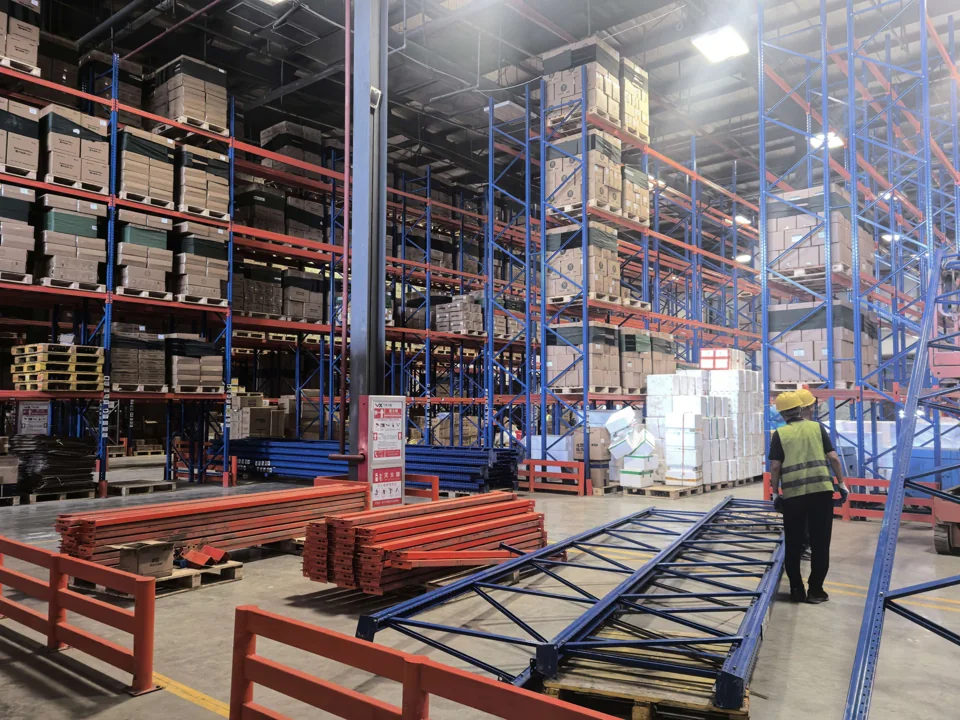
Photograph the load notice, manufacturer labels, the full end frame, a beam connector with its locking device, the base plate and the anchors. On a marked-up drawing, record bay width, frame depth and height, beam elevations and the orientation of the run. Include the original layout and component drawings if available. Take identification photos from a safe location. Ask the site team to flag damage, missing locks or undocumented repairs separately.
2. Document the proposed loads and clearances
For each new beam level, list the pallet dimensions and weight including the pallet, the number of pallets, and the support or decking arrangement. Mark where the forklift will turn and how it will enter the new bays. Include nearby columns, doors, fire protection and pedestrian routes. The last frame of an existing run may have to support beams on both sides after an extension. Have the revised layout and loading reviewed before ordering.
3. Compare two quotation scopes
For a connected extension, ask the supplier to identify the existing system and specify how connector engagement, locks, frames and loads will be verified. A similar hole pattern or a connector that appears to fit is insufficient evidence. Where the original system cannot be documented or its compatibility cannot be established, ask for a separate, self-supporting row with its own approved components. That option still needs a review of the floor, anchorage, aisle and site conditions.
4. Ask for a marked-up drawing and an itemized quote
For each option, request the added pallet positions, the exact boundary between old and new rack, the bill of materials, the assumptions that affect the price, and the scope for design review, installation and updated load notices. Ask who will verify the existing rack and floor and who will sign off on the installed layout. Compare the installed scope, including any extra frames, protection and installation work, before comparing the unit price per bay.
What to send with your inquiry
Send the marked-up layout, photos, pallet data, target capacity and destination. If a rack identification or load record is missing, flag it in the inquiry so the supplier can price an independent layout while the connected option is being assessed. Before installation or loading, have changes to the existing rack reviewed by its original manufacturer or a qualified rack design professional.
Read the warehouse racking selection guide · Rack Manufacturers Institute FAQ
Measurements for an extension enquiry
Photograph the upright profile, hole pattern and beam lock beside a scale. Record beam span, level heights, bay spacing, load labels and any damage. Confirm whether to connect to the existing frame or price a separate row after checking fit and load information.
Review selective pallet racking, see how we prepare a CAD layout, or request a rack extension quotation. For existing parts, use the companion beam, frame and lock compatibility guide.