
Pallet Racking Export Packing and Container Loading Checklist
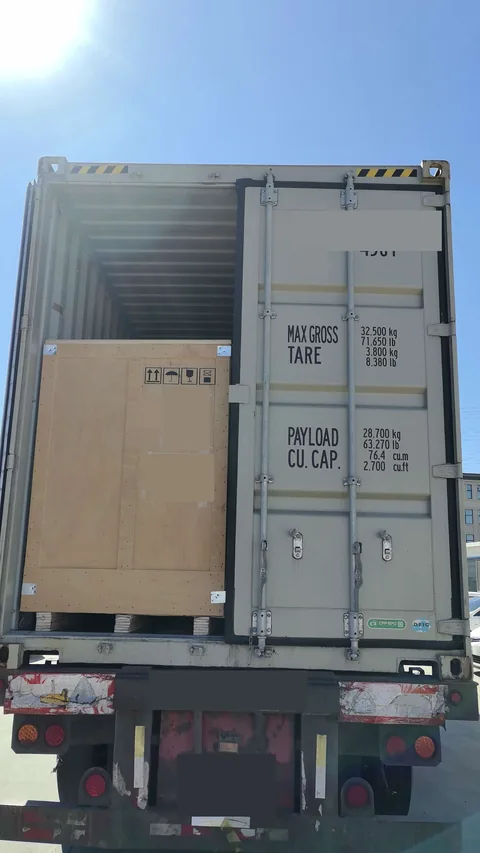
An export racking order needs a packing schedule that can be matched to the component list. Before comparing freight quotations or booking a container, establish the package dimensions, gross weights, handling points and delivery responsibilities. A number of bays alone is not enough to calculate shipment volume.
Ask for one package schedule
| Packing field | What to confirm | Receiving purpose |
|---|---|---|
| Package ID | Unique mark linked to the order and drawing revision | Match the delivered package with the packing list |
| Contents | Component references and quantities in each package | Find beams, frames, bracing, fixings and accessories |
| Packed dimensions | Overall length, width and height with units | Review space and handling requirements |
| Weights | Net and gross weight per package, with units | Plan handling and transport within applicable limits |
| Protection | Agreed surface, edge and contact protection | Set the expected packing condition |
| Handling | Loading/unloading method, lifting information and stacking restrictions | Check equipment and receiving arrangements |
Keep component count and package count separate
A bundle containing several beams is one package but several components. Small fixings may be packed separately from large structural parts. Ask the supplier to reconcile the packing list with the final itemized order, including locking devices, anchors or other fixings only where agreed in the supply scope.
For a mixed distributor order, retain the destination or product-group identifier beside every package. For a project order, agree whether marks should help identify the intended row, component reference or assembly group. Confirm the marking system before production and packing.
Calculate volume from measured packed dimensions
Illustrative example: a package measuring 3.0 m × 1.0 m × 0.6 m has an external rectangular volume of 1.8 m³. Ten identical packages total 18 m³ on that arithmetic basis. This is a volume example, not a container-loading plan or a promise that those packages fit a particular container.
Actual loading also depends on package shapes and orientation, door and internal dimensions, gross weight, allowable loading distribution, handling access, securing requirements and stacking restrictions. Check the chosen equipment and route with the responsible carrier or loading provider. Do not estimate a universal “bays per container” figure from this example.
Agree who performs each shipment task
Record the agreed trade term, named port or place and rule version. Identify export packing, loading, freight, insurance, destination handling, inland transport and unloading as included, excluded or awaiting confirmation. Use the project cost comparison to keep the endpoints consistent.
Prepare receiving and discrepancy records
Arrange the unloading equipment and receiving team against the final package schedule. Check marks, quantities and visible condition, retain photographs where needed and record discrepancies against the relevant package and component reference. Confirm any unpacking or inspection procedure with the responsible team before delivery.
Review manufacturing and packing processes and the order document checklist. Send the component list, destination, intended unloading method and required packing records using the RFQ worksheet or inquiry form.
Equipment reference: Hapag-Lloyd container specifications. Actual equipment dimensions and weights must be confirmed for the booked unit.
Compare a 20-foot and a 40-foot container on the same shipment
Ask for two quotes based on the same packing list, origin, destination and charge coverage. Compare packed bundle lengths, pallet footprints, gross weight and access for unloading. Assess landed freight per complete sellable kit or project with the carrier’s actual equipment limits.