When a Pallet Racking Drawing Changes, What Needs a New Quote?
Published:
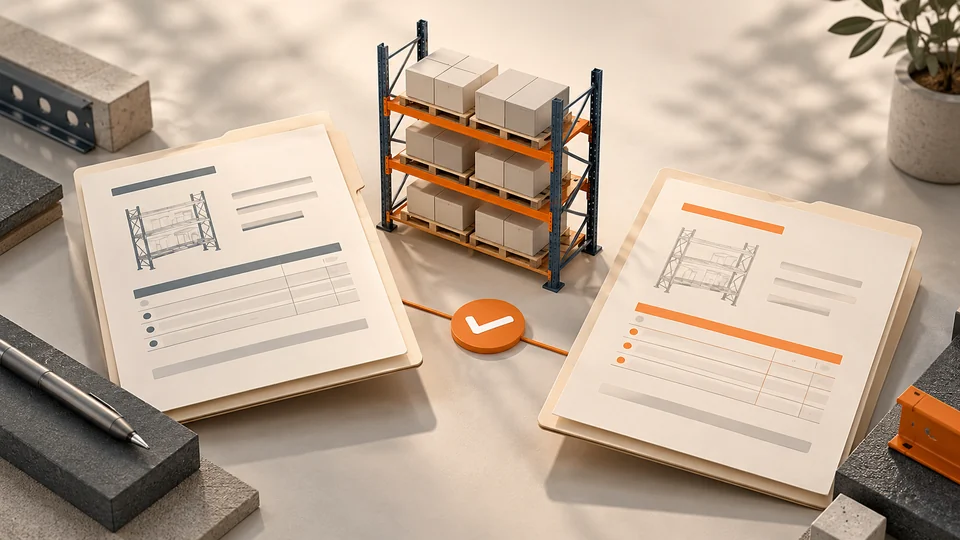
A revised drawing can leave the overall rack footprint looking familiar while changing the quantities and scope behind the price. Before approving the order, ask for a marked-up drawing, a revised bill of materials and a quote that identifies the same revision.
Start with a change list
Put the old and new drawings side by side. For each affected row, record the bay count, beam levels, upright height and pallet positions. Note any change in pallet size, load or forklift access. Mark which rows are unchanged and give the supplier a single reference revision to price.
Separate quantities from specifications
Adding a beam level changes the number of beams and related supports. A new upright height, beam span or load assumption can change the specified components. Ask the supplier to identify revised item codes and quantities and to flag any configuration that needs a fresh engineering review before approval.
Reconcile the commercial scope
Compare the itemised quote and packing list. Longer frames or more steel may change bundle lengths, gross weight or handling requirements. Check whether installation, anchors, protectors and delivery are inside the amended scope. Close with three sign-offs: the layout revision, the scope and quantities, and the quote it replaces.
Example: a row changes from three to four beam levels. Ask for the revised beam and support quantities, confirmation of the affected configuration, and updated packing data before approving the order.
The practical risk is an order acknowledged against the old drawing. A short written change list makes it clear which rows need new prices and who approves the updated scope.
Read the supplier quote comparison guide · Send the marked-up drawing for a quote