WAREHOUSE PLANNING · DISTRIBUTOR GUIDE
Warehouse Racking Systems: A Selection Guide for Distributors
Published:
By HAO RACKING
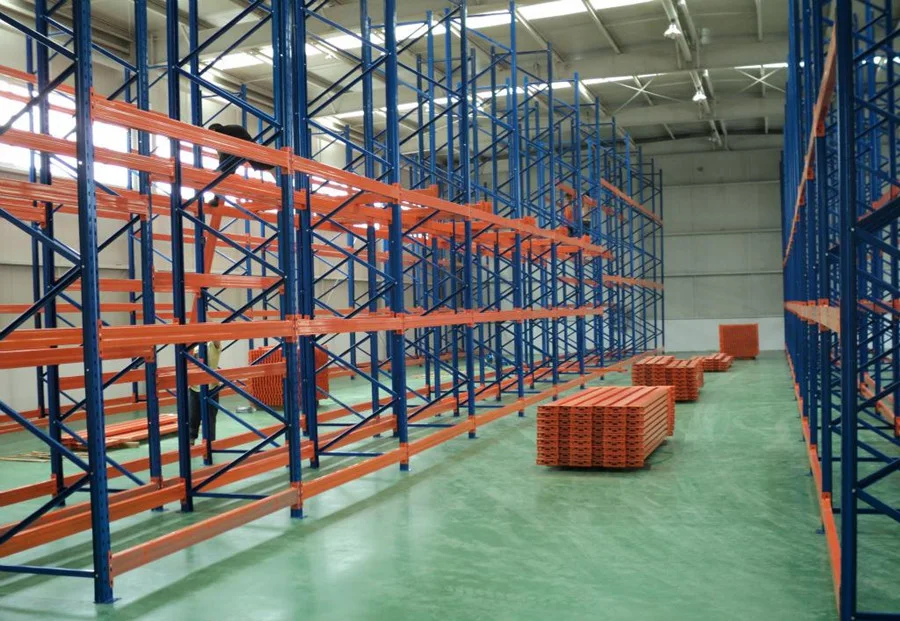
Choosing warehouse racking systems starts with the goods and the picking method. Use selective pallet racking when individual pallets need direct access, investigate drive-in racking for suitable bulk stock, choose cantilever racking for long materials, and use long span shelving for manually picked cartons and parts. A warehouse may need several of these systems in separate zones.
This guide helps distributors, installation contractors and importers turn an early customer enquiry into a useful product shortlist. It covers selection and purchasing questions; final dimensions, capacities and installation requirements must be confirmed for the actual project.
Warehouse racking systems: a quick selection table
| Storage task | System to investigate | First question to resolve |
|---|---|---|
| Mixed palletised stock with frequent individual access | Selective pallet racking | Which pallet sizes, loads and handling equipment will be used? |
| Bulk pallet stock with many pallets of the same SKU | Drive-in racking | Can lane allocation and retrieval sequence support stock rotation? |
| Pipes, timber and long profiles | Cantilever racking | How must each load be supported and handled? |
| Cartons, bins and spare parts picked by hand | Long span shelving | What are the item dimensions, shelf loads and picking needs? |
| A proposed additional storage level | Mezzanine racking | What structure, access, building and local approval requirements apply? |
Use this as a shortlist, not a universal design rule. In particular, “heavy duty” describes a load-related requirement rather than a separate access method. A request for heavy duty pallet racking still needs a defined layout and an approved loading configuration.
1. Start with the unit load, not the rack name
Before choosing industrial storage racks, separate the customer’s goods into pallets, long materials and manually handled items. Record the maximum dimensions and weight of each load, including packaging and any overhang. A single average weight can hide the heaviest item that the system must accommodate.
Ask how stock arrives, where it waits, how it is picked and how it leaves. A customer who receives pallets but dispatches individual cartons may need pallet reserve storage plus a separate picking area. Treating everything as pallet storage can leave the daily picking task unresolved.
- For pallet loads: record pallet construction, entry direction, condition, load height and maximum loaded weight.
- For long goods: record the range of lengths, bundle dimensions, rigidity and handling method.
- For cartons and bins: record item sizes, maximum shelf load and the space needed to retrieve items comfortably.
2. Match pallet racking to access and stock behaviour
Selective pallet racking provides direct access to individual pallet positions in a conventional single-deep arrangement. It is a useful candidate when the customer handles a varied stock mix and needs to retrieve specific pallets without first moving other pallets.
Drive-in racking stores pallets in deeper lanes that forklifts enter. It is a candidate for more homogeneous stock with enough pallets per SKU to use those lanes effectively. The trade-off is restricted individual access. Single-entry drive-in operation normally follows a last-in, first-out sequence; strict date rotation needs a specific solution rather than an assumed FIFO claim.
For the full two-system discussion, see our selective vs drive-in pallet racking comparison. The broad distinction is also explained in Mecalux’s pallet racking overview and its drive-in system guide. These references explain system principles; their product specifications are not HAO RACKING specifications.
3. Separate long-load storage from manual picking
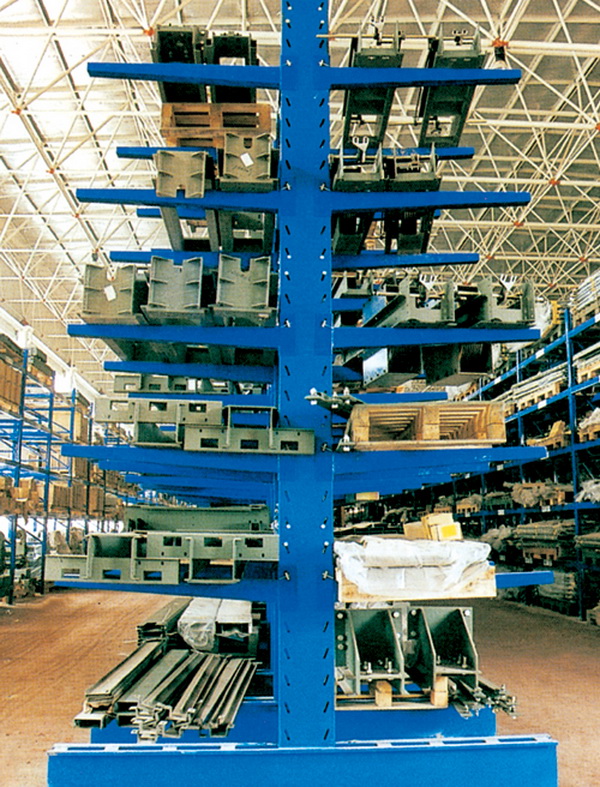
Cantilever racking uses projecting arms to support long goods, leaving the front open for access. Selecting it requires more than knowing total bundle weight: the load length, support positions, arm arrangement and handling route all matter. The distinction between single-sided and double-sided arrangements should follow the available access and proposed layout.
Long span shelving is a candidate for cartons, bins and parts loaded and retrieved manually. Ask about shelf dimensions, load distribution, shelf surface and the number of accessible picking locations. Do not assume that a hand-loaded shelf is suitable for forklift-loaded pallets.
For background on these distinct storage methods, consult the manufacturer’s explanations of cantilever racking and longspan shelving. For available HAO RACKING options, use the linked product pages in the selection table.
4. Compare usable storage, not only nominal positions
A drawing can show many pallet positions while leaving some unavailable in normal operation. For a distributor preparing a proposal, a useful next step is to test the candidate layout against the customer’s actual stock list and replenishment pattern.
Illustrative inventory check: suppose one storage lane at one level contains four pallet positions and is reserved for one SKU. If that SKU currently has only two pallets, two positions remain unused under that allocation. This simple example is not a capacity calculation or a forecast: it shows why the number of pallets per SKU matters when reviewing deeper storage.
Ask the customer for both normal and peak inventory. Then compare the proposed arrangement with access, replenishment, stock rotation and foreseeable changes in product mix. The most useful proposal explains these assumptions beside its position count.
5. Check the warehouse and handling interfaces
Collect a measured plan showing columns, doors, loading areas, obstructions and relevant building services. Confirm the available height and obtain the actual forklift model and its operating requirements. A rack layout should not be fixed around an aisle dimension copied from another project.
Use our forklift-based aisle planning guide for that part of the brief. Floor suitability, anchors, seismic conditions, fire protection and local approvals also need the appropriate project review. A product photograph or a generic load statement cannot resolve those interfaces.
6. Turn the shortlist into a clear supply package
Once the system direction is agreed, ask a warehouse racking supplier to identify the exact configuration and supply boundary. For a distributor or installer, a clear package makes it easier to prepare a customer offer, identify missing items and organise local work.
- Configuration: drawing revision, rack dimensions, levels, quantities and load conditions.
- Components: frames, beams or arms, bracing, supports, decking and agreed protective items, as applicable.
- Documentation: request the relevant loading information, assembly instructions and inspection documents; confirm what will actually be supplied.
- Delivery: packing, component labels, destination, freight basis and unloading responsibilities.
- Local work: define installation, site verification and approval responsibilities explicitly.
For an extension, send existing-system photos and measured connector details. Similar colours or nominal dimensions do not establish component compatibility. Use our warehouse racking RFQ checklist to organise the enquiry, then review manufacturing and packing information and the quality documentation page when evaluating supply.
Frequently asked purchasing questions
What is the best warehouse racking system?
There is no single best system for all stock. Start with the load form, required access, inventory profile and handling method. A mixed warehouse may benefit from separate pallet, long-load and manual-picking zones.
Does heavy duty racking always hold more than selective racking?
The labels alone do not establish capacity. Compare the rated load for the exact components, dimensions, level arrangement and loading conditions. Selective racking can also be specified for demanding pallet loads.
Can a distributor start with an incomplete layout?
Yes. An initial enquiry can describe the goods, warehouse dimensions, handling equipment and destination. Mark unknown items clearly so the discussion can identify what needs confirmation before a firm specification and quotation.
Discuss your customer’s storage requirement
HAO RACKING welcomes enquiries from distributors, installation contractors and system integrators. Send a stock description, a sketch or an existing bill of quantities, together with the destination and known load requirements. Tell us whether you need a system shortlist or a quotation against an agreed specification.